Homeowners planning a new deck usually hit the same wall early on: composite or wood. Both materials can produce a beautiful, functional outdoor space, and neither one is automatically the right answer. The decision usually comes down to a handful of practical questions rather than looks alone: how much upfront investment makes sense, how much ongoing care you’re willing to put in, how the material will hold up to Midwest weather, and how you actually plan to use the space over time. This Composite Deck vs Wood Deck comparison walks through those questions the way a Custom Deck Builder would talk you through them at your kitchen table, before any lumber or composite boards get ordered.
Composite Deck vs Wood Deck: What Is the Difference?
Composite decking is manufactured from a blend of wood fibers and recycled plastic, engineered to resist moisture, insects and rot in ways that natural lumber cannot. Wood decking is exactly what it sounds like: solid lumber, often pressure treated pine, cedar or a hardwood species, milled into deck boards. Neither material is universally better. A homeowner who wants a natural look and doesn’t mind seasonal upkeep may prefer wood. A homeowner who wants consistent color and less routine work may lean toward composite. The right choice depends on your priorities more than on which product is technically superior.
Composite Decks: Benefits and Considerations
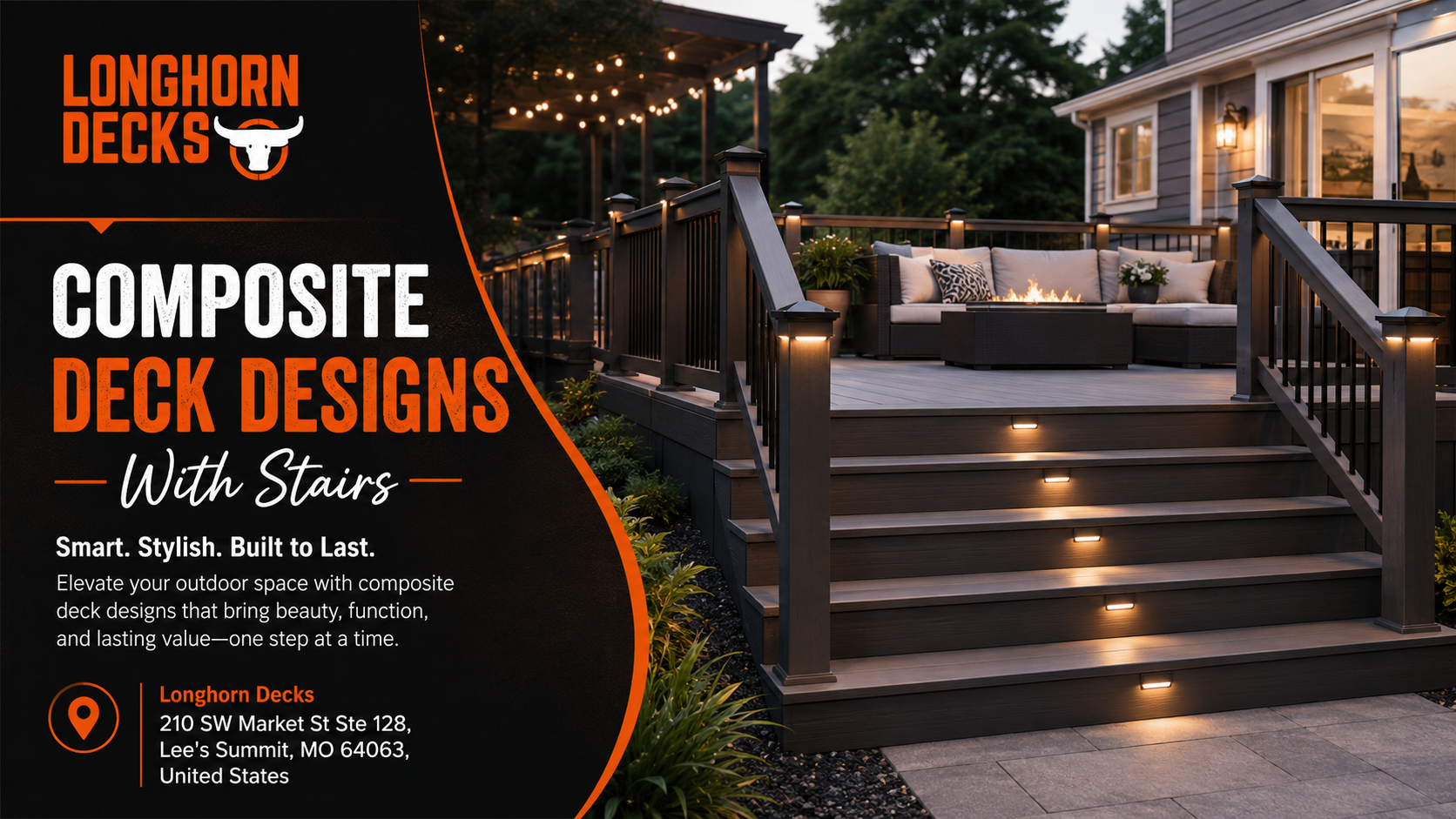
Composite decks typically require less routine maintenance than wood. Most composite products do not require annual staining or sealing. They also resist common problems that come with moisture, such as splintering, warping and rot, better than untreated lumber. Manufacturers offer a variety of colors and finishes, some very similar to natural wood grain. That said, composite is not maintenance free. Boards still need periodic cleaning to remove pollen, dirt and mildew, and performance can vary between product lines, so it’s worth understanding what a specific manufacturer’s warranty actually covers. Composite also tends to carry a higher initial material cost than standard treated lumber, and darker colors can retain more heat in direct summer sun. If you’re weighing a full Composite Deck build, it helps to review actual layouts and stair configurations through resources like Composite Deck Designs before finalizing a plan.
Wood Decks: Benefits and Considerations
Wood decking has a natural look that many homeowners just prefer, but it also can be stained or painted any color and changed later if tastes change. It also is often less expensive to install from the beginning, especially when using pressure treated pine. The tradeoff is continuing care: wood decks typically need routine cleaning, periodic sealing and staining, and inspection of damaged or splitting boards. The lifespan of a wood deck depends largely on the species of wood used, how the deck was built, how much sun and moisture it’s exposed to, and how well it’s maintained. Wood Decks are still a good option for homeowners who appreciate that classic look, and don’t mind the maintenance routine that comes with it.
Which Deck Material Is Better for Kansas City Weather?
Kansas City homeowners deal with a genuinely demanding climate for outdoor structures: hot, humid summers, cold winters, heavy spring rain, and freeze and thaw cycles that stress any building material. Neither composite nor wood is completely unaffected by this. Composite resists moisture damage better but can expand and contract with temperature swings and get hot underfoot in full sun. Wood can handle temperature changes well but is more vulnerable to moisture damage if sealing lapses or drainage is poor. In both cases, proper construction matters as much as the material itself: adequate ventilation underneath the deck, correct board spacing, and drainage that directs water away from the structure all affect how well a deck performs through a Kansas City winter and summer alike.
Composite Deck vs Wood Deck: Which Costs More?
“More than the price per board is the total project price. The deck size, height off the ground, stairs, railings, site preparation, structural requirements and design complexity all come into play. Features such as Outdoor Lighting, a Deck Screen System or a covered section add more cost. Depending on the product line you choose, composite decking will generally have a higher material price, but wood tends to cost less initially but more in maintenance over time. That’s why two neighbours who build decks of similar size can get very different estimates the numbers are based on design, site conditions and materials, not just square footage.
Which Deck Is Easier to Maintain?
Wood decks need regular cleaning, periodic staining and sealing, and ongoing inspection for cracked or damaged boards that may need replacing. Composite decks still require routine cleaning to remove debris and spills, along with occasionally checking the structural framing underneath, and following the manufacturer’s specific care instructions. Composite generally means less frequent work, but it does not mean no work at all.
Think Beyond the Deck Material
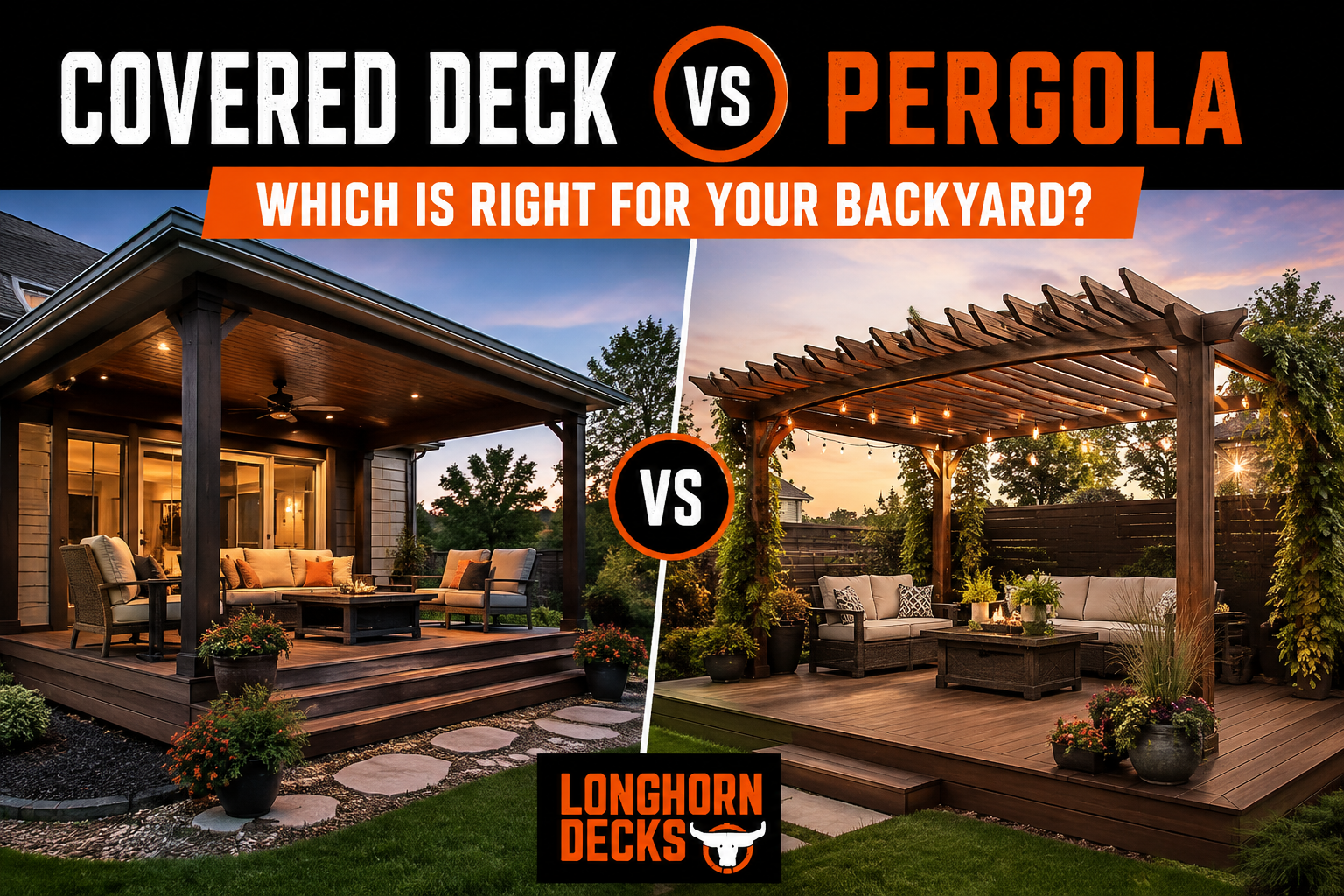
The deck surface itself is only one piece of the outdoor living picture. Many Kansas City homeowners pair their deck with a Patio for additional space, add Covered Decks or Pergolas for shade, or explore a Covered Deck vs Pergola comparison to figure out which shade structure fits their yard better. Thinking through these features alongside the deck material itself tends to produce a more usable outdoor space than choosing the decking first and adding everything else later.
Working With an Experienced Custom Deck Builder
A qualified Custom Deck Builder can help homeowners weigh these tradeoffs against their actual property and budget, not just general pros and cons. Longhorn Decks works with Kansas City area homeowners on material selection, deck design, structural planning and custom layouts, covering both composite and wood options along with additional outdoor living features. That kind of guidance is useful precisely because the right material depends on your specific situation: your sun exposure, your maintenance tolerance, your budget and how you want to use the space.
Ready to Plan Your New Deck?
If you’re weighing composite against wood for your own backyard, the next step is talking through your deck size, material preferences, budget, design ideas and any additional outdoor living features with someone who builds these projects regularly in Kansas City.
Book a Consultation
Longhorn Decks
210 SW Market St ste 128
Lee’s Summit, MO 64063
(816) 477 5412
Both composite and wood decks can serve a Kansas City home well. The better option comes down to your budget, how much maintenance you’re realistically willing to do, the look you want, and your plans for the space over the years ahead. Talking through those specifics with a qualified Custom Deck Builder like Longhorn Decks is the most reliable way to land on the material that actually fits your home.